
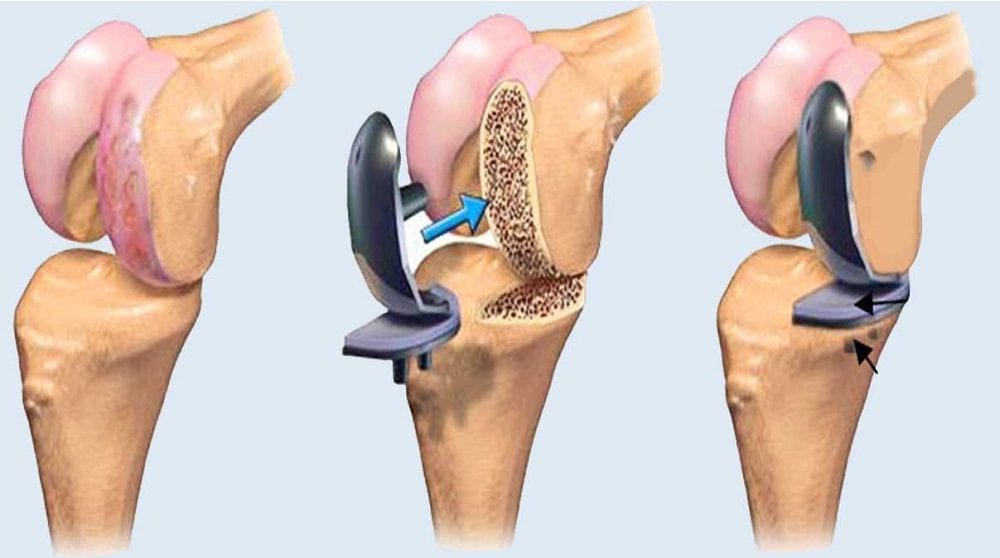
Considering knee replacement
Persistent knee pain can make walking, stairs and getting up from a chair difficult. Stiffness, swelling or a knee that gives way may also affect confidence in everyday movement. Sean Thompson, MD, evaluates knee symptoms and offers partial and total knee replacement options tailored to the condition.
An evaluation does not commit you to surgery. It helps establish the cause of pain, review previous treatment and understand what you want to regain.

Partial and total knee replacement
Replacement addresses damaged joint surfaces. A total knee replacement resurfaces the affected ends of the bones with artificial components; a partial replacement may be considered when arthritis is limited to one portion of the knee. The choice depends on the pattern of damage and the condition of the rest of the joint.
An evaluation may also consider revision replacement for a previous implant that has become painful, loose or worn. New pain after an earlier replacement needs an evaluation to identify the cause before a treatment is chosen.
Treatment before surgery
Nonsurgical options include physical therapy, activity changes, medication recommendations, injections, bracing and strengthening. The appropriate combination depends on your diagnosis and health. Ask what each treatment is expected to accomplish and how you will assess whether it is helping.
Replacement may be discussed when pain and disability remain substantial despite appropriate care. During the consultation, explain your walking limits, sleep disruption, work demands and activities you have given up. Dr. Thompson can review these concerns alongside the examination and imaging.
Recovery requires participation
Postoperative monitoring, physical therapy recommendations and progress evaluations are part of care. Recovery includes managing discomfort and rebuilding movement and strength. Make a plan for transportation, help at home and the exercises recommended for you.
The AAOS total knee replacement guide explains the procedure, evaluation and rehabilitation. It also covers possible complications, including infection, blood clots, stiffness and continued pain. Discuss both expected gains and possible limitations before deciding on surgery. Recovery milestones should reflect your progress rather than a promised date.
Patient questions
Is a partial replacement right for me?
A partial replacement is an option for selected knees, not a smaller version that suits everyone. Ask which areas are affected and why partial or total replacement is recommended for your knee.
Is arthroscopy the same as replacement?
No. Arthroscopy uses a camera and instruments to address selected problems inside a joint. Replacement resurfaces damaged joint areas with implants. The diagnosis determines which, if either, is appropriate.
What if I am not ready for surgery?
Ask about the nonsurgical options that remain reasonable and when to reassess. Bring your concerns about pain, recovery, home support and work so they can be included in the decision.
Related patient guide
Still deciding where to start? Our guide to when to see a doctor for knee pain explains evaluation questions and how to prepare for a consultation.