
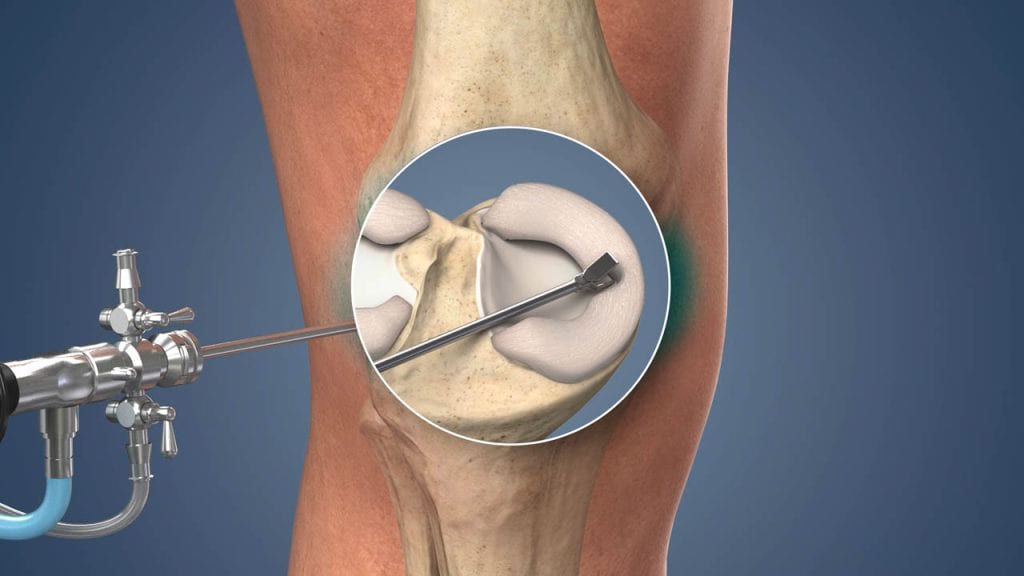
Looking inside a painful joint
Arthroscopy is a surgical technique that uses a small camera and instruments through small incisions to examine and treat selected problems inside a joint. Sean Thompson, MD, performs knee and hip arthroscopy and arthroscopic shoulder surgery, as part of his orthopedic practice.
The useful question is what problem the procedure would address in your joint. Smaller incisions do not remove the need for a diagnosis, careful treatment selection or rehabilitation.
Conditions and procedures
Conditions evaluated for arthroscopic treatment include meniscus tears, ligament injuries, rotator cuff problems, shoulder impingement and cartilage damage. These conditions differ in their symptoms, treatment choices and recovery demands. Some can be managed without surgery; others may be candidates for an arthroscopic procedure after evaluation.
The AAOS arthroscopy overview explains how a camera displays the joint interior and how instruments can be used for selected repairs or removal of damaged tissue. The specific operation matters more to recovery than the word arthroscopy alone.
Deciding whether arthroscopy fits your needs
Your consultation begins with a review of symptoms, previous injuries, activity goals and treatment to date. Examination and relevant imaging help identify what may be causing pain, catching, weakness or instability. Bring prior imaging and information about physical therapy, injections or earlier surgery if available.
Ask Dr. Thompson to explain the proposed procedure in plain language: which tissue is involved, what will be repaired or removed, and why that may improve your symptoms. Depending on the condition, alternatives may include continued nonsurgical treatment or a different operation. The practice provides both surgical and nonsurgical orthopedic care, with recommendations based on the individual evaluation.
What recovery involves
Rehabilitation and physical therapy can be part of restoring joint function. Ask whether you will need a sling, brace or walking aid and what restrictions apply to work, lifting or weight-bearing. A repair may need protection while tissue heals even when the skin incisions are small.
AAOS notes that recovery and rehabilitation depend on the procedure performed. Its guide also describes potential complications, including infection, blood clots and injury to nerves or blood vessels. Discuss risks, pain management and follow-up before surgery, and make sure you know how to contact the care team about a concern.
Patient questions
Will arthroscopy fix every cause of joint pain?
The procedure is used for selected conditions. Ask which part of your symptoms it is expected to address and which limitations may remain.
Can I have physical therapy instead?
Ask which nonsurgical choices are reasonable for your diagnosis and whether you have already had an adequate trial. A consultation can compare those choices with surgery.
When can I return to exercise?
The answer depends on the joint, the procedure and your healing. Discuss your exact activity goals and the milestones you will need to reach before resuming them.